



I realize that I’ve been on this road to sustainability much of my life and have had years and years to slowly adjust myself toward a zero waste lifestyle, but not everyone lives and breathes it the way I have. As much as I hope I can be an inspiration, I know that just like with most things it can be a bit daunting to read about someone who seems to do things so much more effortlessly than you do (how I feel reading about people’s $200 grocery budgets or their intricate investing strategies).
I will continue to write about what my life looks like and my struggle to get closer to true zero waste, but there is also a lot of value in sharing stories of people who have come more recently to this kind of life and are perhaps more relatable to anyone who is just starting down their own journey to sustainability and zero waste.
At one point Moriah Joy from Our Table For Two made a comment on Twitter about the beginnings of her sustainability journey, and I reached out to her to see if she’d write a guest post for me just on that topic. Happily, she agreed, and wrote the following walking through her steps to a more sustainable lifestyle. Just like me, it’s a work in progress, but every step is so important and makes a difference in the long run. And with that, I’ll turn the rest of this post over to her to walk through the simple steps she’s taken to live a more environmentally friendly life.
Simple Steps To A More Sustainable Life
In college, my friend and I tracked our trash while also doing a report on sustainable living practices. Ironically, we both noticed that we were holding a disposable coffee cup in our hand. It made sense then to go and buy reusable coffee cups.

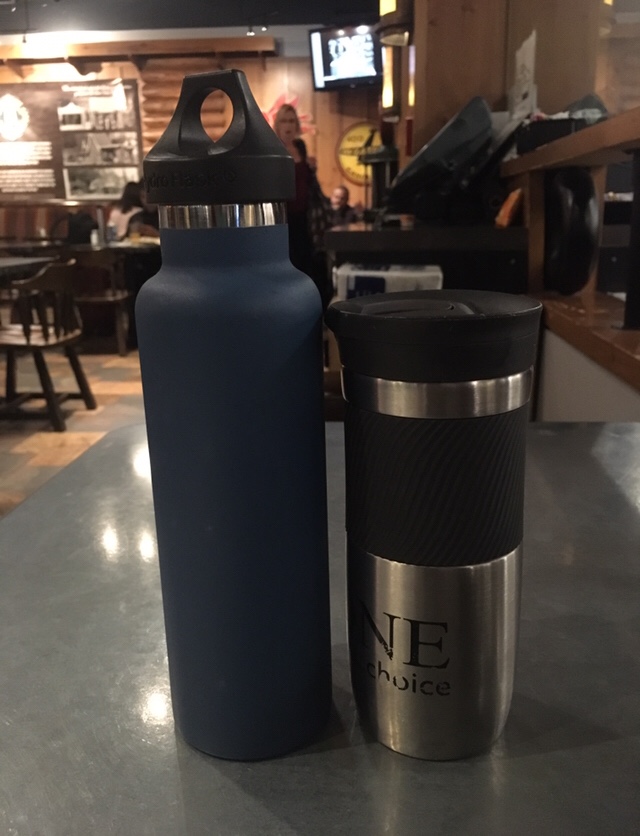
That was my first foray into sustainable living. I wish I could say that, boom, it was super easy for me to transition into a zero waste lifestyle, but that has not been the case.
However, I’ve come a long way since then. Here are the changes I’ve made to create a more sustainable lifestyle for myself.
Steps to Sustainability: Coffee
Since it was the first place I noticed how much waste I was generating, my coffee habit was also the first place I severely cut back on waste. Coffee and I are probably best friends. My husband laughs at me for saying this, but it’s true. It’s also true that our current consumption of coffee causes quite a landfill disaster (disposable cups, K-cup pods, filters, etc.).
Thankfully, I’m a bit of a coffee snob, which means I brew my own in the morning. We have this really, REALLY cheap espresso maker and I would love to upgrade, but it does the job. And it doesn’t need filters, so it doesn’t generate any waste. At work, if I need a second cup, I have a french press and coffee grounds that I store in the fridge, which is also waste free.
We buy local coffee, but since it’s from a chain grocer, the coffee comes in non-recyclable bags. I’m working on finding a different supplier where I can buy in bulk and forgo packaging, but at the moment, a bag every three to four months is the only trash my daily habit produces.
Steps to Sustainability: Storage
The next biggest area that I tackled was food storage. I don’t buy ziplock bags. Or plastic Tupperware. My mother-in-law gifted me with a bunch of wonderful storage containers and we use them for everything: cheese, butter, half chopped onions, leftovers. You name it, we store it.
The decision to not buy ziplocs came when we moved a few months ago. We gave the ones we had away because I didn’t feel like packing and unpacking them, and then we just never replaced them. It’s been a little different, and I’m not a fan of living without them, so we just bought reusable, dishwasher safe ones, and if we like them, we’ll buy more. On a similar vein to ziplocs, I stopped buying paper towels when we moved. Now we have rags that we use for cleaning.


Steps to Sustainability: Shopping
We live in California, which means that anytime we go to the store, if we forgo bring our own bags, we’re charged with a 10 cent tax on each bag. This means we’ve gotten really good about bringing our own grocery bags to the store. This is a huge incentive to do the environmentally friendly thing and bring our own bags, which I do. Plus, it’s easier to carry a backpack a mile back from the store than grocery bags, and since I walk, it’s a sensible thing to do.
We also try to avoid packaging when we grocery shop. Well, at least I’m starting to think about it more. As part of 2019, I’ve started to cook more (2018 me was a huge fan of processed foods), and this change has cut down on packaging. We also have reusable produce bags that we use to carry stray onions and things, and we stay away from the single use plastic bags in those isles. One thing I’ve considered doing is buying more things from the bulk section to cut down on packaging, like we do with our cereal, but I haven’t figured out the best way to do that. It’s a work in progress.
Steps to Sustainability: Work
This seems like it would be an easy one, but a lot of times it depends on the office you’re at as to how set up to be zero waste you are. At my previous office, they had a dishwasher and selection of glass cups and coffee mugs you could use. They also had metal silverware. When you were done, you just popped it into the dishwasher and bada bing, bada boom, no waste.
My new office has many more disposable products, and I’m learning to remember silverware with my lunch. I don’t always succeed, but progress is key. I do, however, keep an office mug and an office water bottle handy. And eventually, I will remember to bring a spare plate to keep in a drawer.


Steps to Sustainability: Daily Living
A lot of our changes were small ones that are fairly easy to adopt. This last one, not so much. About a month ago, we decided to move. We lived thirty minutes outside the city, and while the space was wonderful (we had about 1200 sq feet in a loft above the barn), the lifestyle killed. Any time we wanted to do anything, we had to plan for an hour in the car, and then however long it took us to actually do the thing. Grocery store shopping was a pain, and I hated how much gas we were using (my husband was going through a tank a week, and I was going through two to three).
So we decided to move into an apartment walking distance from everything but my job. The store, the library, several parks, the church that I work at part time and the parish we attend. My husband walks to work about 75% of the time, and when the summer months come, I’ll be able to bike to and from work.
This one change really affected in a positive way how much time we spend in our cars. It’s better for the budget (rent is $43 more expensive, but we’re saving several hundred in gas and we’ve shaved hours off of my weekly commute) and our overall environmental footprint. Plus, I love being able to walk anywhere I need to go. Or bike, if I’m in a time crunch.


Final Thoughts
Overall, it wasn’t hard for us to switch to a more environmentally friendly lifestyle. It took some conscious changes, and we’ve run into a few hiccups, but it’s been a positive change. Some switches were easy, like cloth rags as opposed to paper towels, but others I’ve struggled with slightly more, like remembering to bring — and store — dishes at the office.
It’s also a work in progress, we’re not nearly as waste free as we could be, and I’m doing small things this year to help with that. For example, we have plans to grow a tomato bush and an herb garden in the balcony of our apartment. We can’t do much more than that as space is limited but it will cut down on the packaging of herbs and spices I use to cook with on a routine basis.
I‘ve appreciated the challenge, and I’m a far cry off from where I started — researching sustainability with a disposable coffee cup in my hand.
-Moriah Joy, Our Table For Two