

I met Liz back in November of last year at the inaugural Cents Positive. While I was so excited to meet blogger friends in person, again or for the first time, I really hadn’t given a lot of thought to the other women who would be attending the event, considering well over half of them were not bloggers (there were perhaps twenty or twenty five bloggers of more than eighty women who attended the weekend).
Other than bloggers, I had only met one other person in real life who had retired by their mid fifties or earlier, and that was my husband’s godfather, who travels with us often. Obviously, there are many others who have also done so, but since the majority don’t talk about it publicly, we don’t really get to know them in the same way.
At Cents Positive though, I met a number of women who had pulled the trigger on early retirement, and many others who were along all different places in their journey to financial independence. Liz was one of them. She retired in the summer of 2017 and, as I found out through conversations that weekend and then later through email and then text, she hasn’t worked a day since.
The idea that everyone who “retires early” find some encore career or other source of income (ahem, like blogging) is perpetuated by the fact that those are the people who tend to write about it publicly. The ones who aren’t blogging or sharing online are simply living their lives, oftentimes very much off line.
Eventually, I asked Liz if she would write a blog post for me here, and I was thrilled when she said yes. We’ve talked about a number of overlapping interests, mostly gardening and sustainability (they have an electric car and solar panels and are using gray water to water their garden), but this post today is specifically about the numbers. She tracked her finances closely through 2018, her first full year of early retirement, and she shared them with me here, as well as some snippets about her life since she walked away from her corporate career.
I’m going to turn the rest of this post over to her and let her walk you through her finances and her life since she quit two years ago. Considering some of what she writes about below, I think I may have to ask her back again to tell us more. Ps – she’s also shipped me a box of hand me down clothes recently, which included my new favorite sweater as well as a new pair of flats – essentials for continuing my clothing ban past two years. New female FIRE friends are the best friends.


2018 Financial Review From a Non-Blogging, Work Optional, High Cost of Living Dwelling Lady
What up fellow work optional seekers?! I love analyzing and discussing finances. And I love figuring out how to live life with a low carbon footprint so it was so much fun to meet Angela at the Cents Positive retreat in Denver last fall. I was quite honored she asked me to write a guest post for her blog.
I had the privilege to pull the plug early from my high stress, but fun and rewarding Corporate America career in the summer of 2017 at age 44. It’s been an interesting almost 2 years for me but that’s a whole separate blog post! I have NOT worked for freelance or W-2 income since my retirement date, and I live completely off passive cash flow from my investments, or as Tanja Hester calls it in her Work Optional book, my “magic money” stream.
I have made the choice not to work for a lot of reasons, but mostly because I have workaholic tendencies and I need to get some space to breathe and figure out where to best use my talents and passions (I’m still trying to figure that out). Since so many people in the work optional space meet their cash flow requirements partially with some sort of income, I thought it might be interesting to see how it actually works for someone without. I’m going to throw out some real numbers.


Before I dig into the numbers, I wanted to share that the post feels both confessional and reassuring. It feels confessional because as I compiled the detail on my expenses, it is clear that I live a pretty rich lifestyle. It feels reassuring because the total cost falls within the passive income generated from my non-retirement assets. I’ll start with this disclaimer: I don’t feel like I live that frugally. I spend mindfully (though I’m far from perfect) and after spending a couple of years obsessing over numbers as I got near to the end of my work optional journey, I didn’t pay too much attention to my spending in 2018, on purpose.
A couple other caveats: I am the proud parent of one 11 1/2-year old child, no pets (we love pets but after losing our 16-year old mutt 4 years ago chose to go without). Also, my partner and I have separate finances. My daughter’s father and I have been divorced for over a decade, and when my partner and I got serious (we married in mid-2016), we chose to keep our finances separate but fair, if that makes sense.
My partner pays half the housing costs and we split other living expenses – more on that part later. Finally, we live close to where we do our routine activities so costs to operate vehicles are quite low. And one is electric and powered by the sun – woohoo solar panels!
So, How Much Did I Spend?
| Half Mortgage | $10,000 | 20.12% |
| Half Utilities – Internet, Gas, Electric, Water | $900 | 1.81% |
| Health & Dental Insurance – Liz & Kiddo | $4,400 | 8.85% |
| Half Homeowner’s and Car Insurance | $1,700 | 3.42% |
| Half Property Taxes | $4,000 | 8.05% |
| Groceries | $5,000 | 10.06% |
| Home Maintenance | $1,600 | 3.22% |
| Gas, Car Maintenance & Registration | $1,100 | 2.21% |
| Eating Out | $1,250 | 2.52% |
| Donations & Gifts | $1,100 | 2.21% |
| Ski Passes | $900 | 1.81% |
| Shopping/Haircuts/Personal/Target/PT | $2,260 | 4.55% |
| Kid Swim/Tri Team | $2,040 | 4.10% |
| Other Kid Stuff – Clothes, Sports Equip, Extra curric | $800 | 1.61% |
| Kid Proper Race Bike | $1,250 | 2.52% |
| Travel | $3,000 | 6.04% |
| Taxes | $7,900 | 15.90% |
| Cash Withdrawn | $500 | 1.00% |
| TOTAL OUTFLOWS | $49,700 | 100.00% |


Expense Discussion:
I think the charts make things pretty self-explanatory, but I’ll call out some areas of improvement from my expenses.
As a family, we were quite social in 2018, which should continue but we are being more intentional about spending less overall and spending less time at a certain craft brewery 1 mile from my house. 1 1⁄2 pints at a time at the brewery once every couple of weeks adds up more than I would like to admit. And, yes, my favorite brewery sells half pints.
Our regular food bill could be reduced as well. We are starting to shift our shopping style and buy only what we need for the next 4- 5 days and despite it seeming counter-intuitive, we are spending less this way and have reduced our food waste. Furthermore, we have shifted to a heavier plant-based diet and reducing our animal protein intake. I don’t pass judgment on how other people eat because I think everybody’s body runs differently but I think that my body and planet are better in the long run through higher levels of plant-based eating.


Travel
We love to travel and used points in 2018 to cover the lion’s share of travel expenses. I estimate that we used about $4,000 worth of Chase Ultimate Rewards* and Marriott Points* for hotel stays and a car rental, and Delta for several plane tickets. Those points have real value even though I don’t use them optimally according to the travel hacking experts. My primary goal is to reduce our out of pocket travel expenses as much as possible, so with that in mind, I’m meeting our family’s desires. I’m nearly out of Chase points, so I’ll have to embark on a little credit card travel hacking in 2019 to replenish our stash.
(*affiliate links – you can read up here how I used them to fly to Hawaii for $11.20/person and get 4 free hotel nights on the beach earlier this year -Angela)


There is something I wished I’d done differently on the travel side. I booked some last-minute plane flights to my Grandmother’s funeral in September and paid about $700/ticket instead of using Delta points. I wish I had simply used points. I wanted to save them for some sort of fun trip but wasn’t thinking clearly in the emotion of the moment and paid a premium price for a last-minute ticket to Little Rock, Arkansas.
Kid Costs and Activities
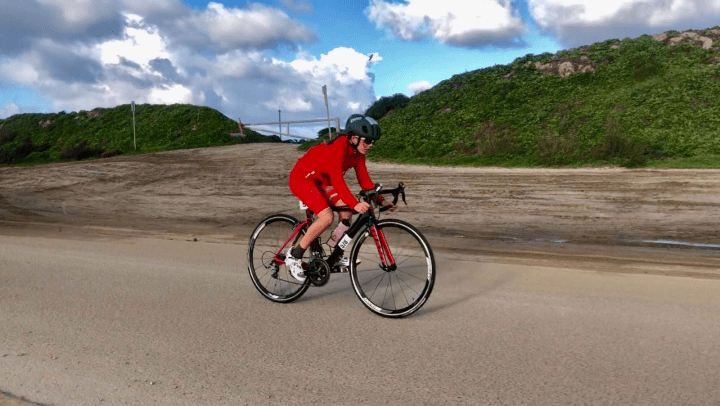
I spent a lot of money on my kid’s activities and equipment for her sports in 2018. It was the first year I invested much in these areas – she grew a ton! I got her a used road racing bike in early November (she is a triathlete) for $1,250. It is carbon fiber, has race wheels and a power meter (!!!) and should serve her well for the next few years.
Since I didn’t know if she wanted to pursue her sports more seriously, I held back on spending that kind of money on her equipment until she indicated she wanted to get more serious about triathlon. It probably seems ridiculous to have spent that much for an 11 1⁄2 year old’s extracurricular activities, but in the interest of transparency, I want to be honest about how much I spent.
Maybe you feel guilty about some of the money you have spent on your children or maybe your own self-care? For what it’s worth, I don’t you should feel guilty about spending money on things that bring value, happiness, sanity and health to your life. I expect that some may be critical of these choices, but there are other areas where I spend much less, so I view it as a trade-off.
Her activities are an important part of her long-term development and she is moving along her own path and building new skills, experiencing failures, expanding resiliency and fitness along the way. She just completed an after-school theater program last week, but, alas, that also costs money.

Taxes
One expense area I don’t see a lot of people in the financial independence community discussing are taxes. If you live in the United States and you have a partner who still works for W-2 income, you are going to have to pay some income taxes and it’s a good idea to make sure you put them into your budget!
The new tax laws made it difficult to estimate so I chose not to pay anything on my income until I filed our 2018 taxes and had to pay a small price for doing so – a $177 tax underpayment penalty. That was an error on my part – and I’ll be paying quarterly taxes on a go forward basis, since I have an aversion to paying any sort of interest.
The donations and gifts line item are mostly donations (we buy or make mostly consumable gifts these days so that ends up in the grocery line item). These are donations over and above grants funded through my DAF (Donor Advised Fund) I set up before I retired. Since that cash was set aside in 2017, I don’t include it in 2018 cash flows (more on this stuff later).
Cash Spending
On the cash side of things, I don’t track where the cash goes when I get it out of the bank. Some of that money went to paying our babysitter, some for my kiddo’s allowance and probably 2/3 went towards going out to eat. Unless we have something where we will be gone for a significant chunk of time, we won’t be using a babysitter anymore and we have cut back on going out to eat already as well as trips to the brewery though I expect my cash expenditures will be about the same this year.
For those who want to dig into the details of my expenses, you can probably see there are a lot of discretionary line items. I’m not that frugal. There, I said it again.

How did I earn the cash flow to meet the needs of this lifestyle?
To figure out when I could plug into my work optional lifestyle, I loosely used the 4% rule as a big picture rule of thumb but I built in a fairly significant cushion. I focused on deriving all my cash flow from non-retirement assets without having to sell any shares or access any of the principal from those cashflow generating assets. I’m pretty conservative and sequence of returns risk is real and my opinion is that you have a much higher likelihood of not running out of money if you follow a 2.5-3% rule of thumb.
Income Sources
| Peer Street Income | $26,000 |
| Private Equity Investment Cash Flows | $16,000 |
| Other/Miscellaneous | $2,000 |
| Vanguard Dividends | $13,600 |
| Total Inflows | $57,600 |


I chose to use Peer Street (peer to peer short term lending on residential and commercial real estate) and a private equity investment (underlying assets are real estate bridge loans as well) to meet most of those cash flow needs. I spent 20 years in the banking industry and I have a pretty good understanding of this type of investment; however, I don’t recommend it in general.
In fact, I decided to scale back my Peer Street investment significantly in 2018 and use the proceeds of the loan repayments to pay off the mortgage on my house which, while not the highest and best use of those funds, allowed me to lock in some returns and reduce my housing costs for the future. I noticed a decline in the asset quality of the Peer Street loans so paying off the mortgage and reducing my taxable income in the process feels like the right decision.
$500 of the other line item represents an Electric Vehicle Climate Credit for driving an electric car (I have a 1st generation Nissan Leaf I bought used in late 2015 for $7,500). I also earned $140 for excess solar production. It’s a fun feeling getting a return on the investment I made in our solar panels and the electric car (also, I have no electric bill). The rest of that other category was random stuff I sold on Craigslist like my kid’s old bike, her outgrown ski gear and several other odds and ends. I don’t expect to have that income in the future.

What Will Things Look Like Going Forward?
Since I made a couple of significant changes to my income stream, you might be wondering what things will look like in 2019 for me. My biggest expense – half of the mortgage – is gone!
Because I paid off the mortgage, my partner decided it would be fair for him to pay for all the property taxes and utilities and to cover my health and dental insurance on a go forward basis. He had been paying half the cost of the mortgage, property taxes, and utilities for about 5 years which, all-in, was less than the cost of a 1-bedroom apartment in our city so it feels like a fair arrangement for him to cover those expenses which are still less than he was spending monthly when he paid half the mortgage.
Finally, my daughter’s father and I have a civil relationship and we discussed our kiddo’s insurance coverage in 2018 and he agreed to cover her from now on. Yes, things could change for him and I’m prepared to step up and pay for her coverage again should something unexpected occur (and I have cushion built into my budget for this) but my hope is this continues.
This is my planned expense situation for 2019:
| Shopping/Haircuts/Personal/Target/PT | $2,150 |
| Half Homeowner’s and Car Insurance | $1,700 |
| Groceries & Supplies | $5,000 |
| Home Maintenance | $1,600 |
| Gas, Car Maintenance & Registration | $1,100 |
| Eating Out | $1,250 |
| Donations & Gifts | $1,100 |
| Ski Passes | $900 |
| Kid Swim/Tri Team | $2,400 |
| Other Kid Stuff – Clothes, Sports Equip, Extracurric | $800 |
| Travel | $2,000 |
| Cash Withdrawn | $500 |
| State and Federal Income Taxes | $6,000 |
| TOTAL EXPENSES | $26,500 |


Now taxes and groceries/supplies represent most of my expenses. I’m hoping I will spend less than I’m projecting due to some other more intentional habits I am employing in 2019 but I just don’t want to expect that things will be all that different and be surprised at the end of the year when it isn’t.


Something else I’m thinking about on the expense side are donations – I set aside a chunk of money when I went work optional in 2017. I want to find a way to continue to give and fund the DAF. Since my 2019 projected expenses are well below my rule of thumb spending big picture plan, my hope is that I start putting more into that fund – for some reason $4,000-$5,000 sounds like a good annual goal donation number though I’d like to give more.
I’m putting a number out there because I feel like it will help keep me accountable, not to make anyone feel any guilt about whether they are donating less. I should have an income surplus if my income continues as planned. As I was writing this piece, I realized that my travel hacking more or less offsets my planned donations and putting it into that perspective makes me more convicted to give. My privilege allows me to arbitrage credit cards to travel. It’s kind of amazing to think of it that way.
What About Income in 2019?
| Peer Street Income | $12,000 |
| Private Equity Investment Cash Flows | $16,000 |
| Other/Miscellaneous | $500 |
| Vanguard Dividends | $13,600 |
| Total Inflows | $42,100 |


My income streams in 2019 should shift and the chart makes it easy to see that I should receive about 1/3 from each income source. I didn’t set myself up with a large amount of savings/cash to “spend down” in retirement. Don’t get me wrong – I don’t think that’s a bad way to manage things. I simply chose a different approach.
I try to always remember that no plan is perfect, I can’t control most of the outcomes, and, moreover, I don’t know what I don’t know so any rules or investment guidelines I set for myself are ultimately arbitrary and won’t make a difference should a black swan event occur. My plan allows me to sleep soundly and more importantly, has allowed me to enjoy myself and spend very little time thinking about and managing my investments.
Airbnb Dreaming
I’m currently exploring the construction of an apartment over my garage to use for Air BnB/VRBO purposes. The costs are not insignificant and the regulations on these types of units in my city seem to be changing pretty rapidly so I’m not sure if that will happen.
Frankly, it will be a bit of a hassle and a lot of work and will require more active management than my current income stream. It also means that some cash is tied up on that investment during the construction phase without earning a return so there is a real opportunity cost moving forward with it.
It’s fun to think about, though, and see if there is a way for that to become a 4th income stream. I have several neighbors who have already taken the plunge and are earning good chunks of money so I’m intrigued and feel like it could be a long-term viable strategy. I live centrally (quite close to the airport) in a city where people vacation.
On the surface, it’s an excellent place to have an AirBnB. And if you’re like me and thinking, long, long, long term, it might provide enough income for me to age in place in my home as well as some additional funds to help my child with post high school education, should she choose that route.
If you are curious about Airbnbs as a traveler instead of a side hustler but haven’t stayed in an AirBnB before, I would highly recommend it. We love the flexibility it gives us while traveling as a family – full kitchen, laundry, and extra bathrooms, and it’s usually considerably cheaper than a hotel, especially when you travel as a group. If you’re new to AirBnB, here’s a link for $40 off your first stay (affiliate link). And check out my post on how to travel more sustainably with Airbnb while you’re at it!


Conclusion
Thank you for following along with me and my 2018 financial journey. My hope is that I added some sort of value to you in your journey. Since I hadn’t paid much attention to my finances in 2018, I felt like I needed to do a deep dive to determine my areas of success and where I could improve and in so doing, I felt like I tightened up my own financial picture.
I also made peace with choosing to spend more in the areas of my life that bring me the most value! Since we are nearly halfway through 2019, it’s probably time for me to dig back in and see if I’m making progress. In the meantime, please feel free to share your own successes and failures or whatever else is on your mind in the comments.
-Liz
Ps – let us know what you think! She’s open to coming back for another post in the future, so let me know what sounds interesting to learn more about her story 🙂